


.png)
Mandruvá’s D.R.A.M.A. Finds a New Ritual on THISBE Recordings
The most interesting electronic records often operate in the gaps between definitions. They may borrow from house without being house, from psychedelia without becoming psychedelic music, or from traditional rhythmic forms without attempting to reproduce them literally. Mandruvá's D.R.A.M.A., released on THISBE Recordings, thrives in precisely those gaps.
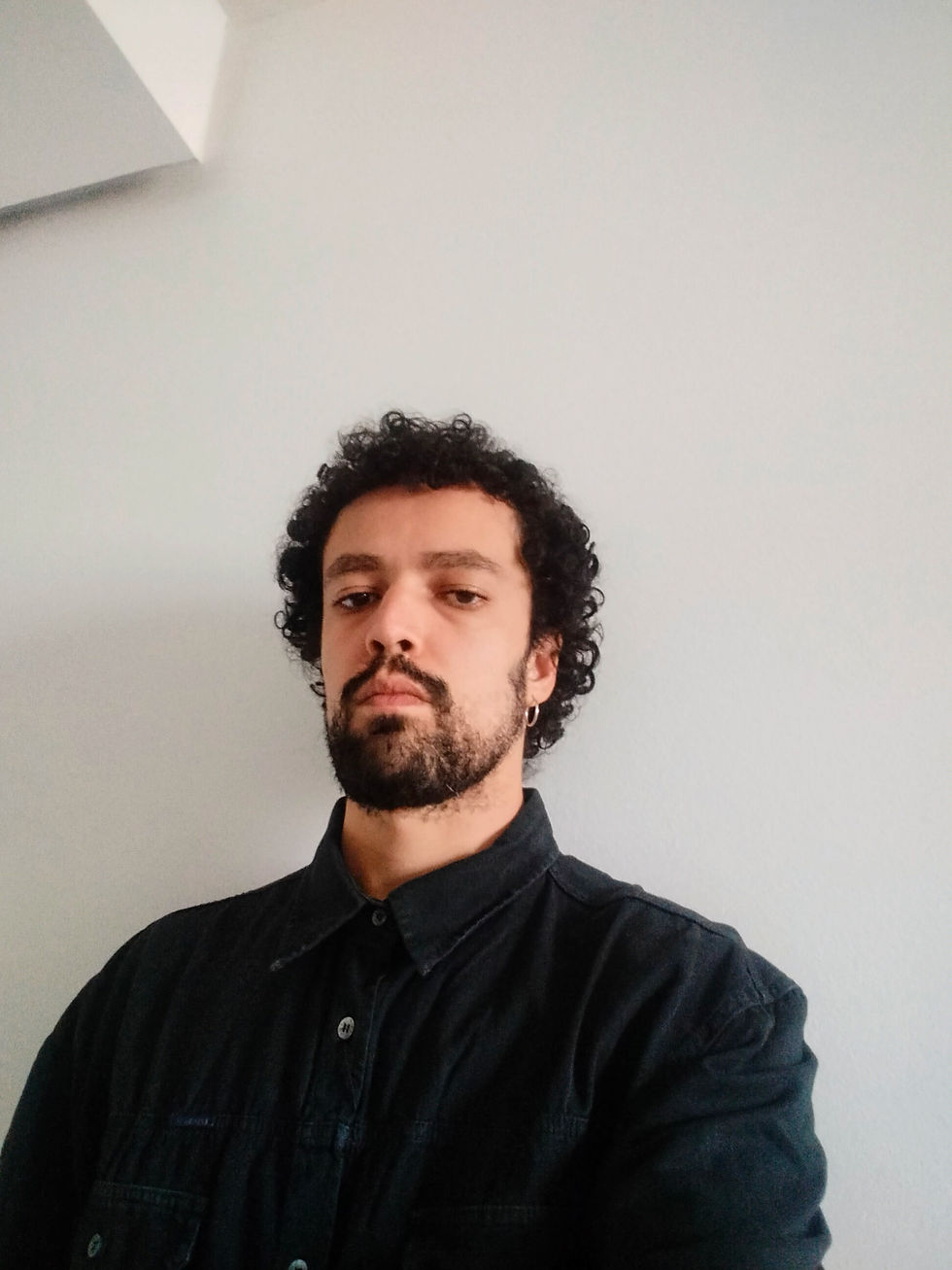
The alias belongs to Brazilian artist Murillo Faleiros, whose work over almost a decade has gradually established a distinctive space between organic rhythm and electronic experimentation. His productions draw on global percussion, deep grooves, acid sonics and psychedelic textures, creating music that feels simultaneously familiar and slightly displaced.
With D.R.A.M.A., those ingredients are distilled into two original tracks.
The title invokes ancient Greek drama and its origins in celebrations dedicated to Dionysus, linking theatre with festivity, ritual and altered states. It is a concept that could easily lead to overstatement, but Mandruvá wisely keeps the mythology in the background. The music itself provides the real interpretation.
And the interpretation is rhythmic.
The originals develop through patient grooves that gradually become more immersive. Percussion remains central throughout, giving the tracks an earthy quality even when the surrounding electronics become increasingly abstract. Acid tones introduce flashes of tension, while atmospheric details create a sense of depth around the rhythmic core.
Nothing feels completely fixed.
That is important to the EP's character. Mandruvá's music is repetitive without being rigid. Patterns return, but their context changes. A percussion line that initially sounds straightforward can acquire a different emotional weight once another texture enters the arrangement.
The effect is subtle but cumulative.
After several minutes, the music begins to feel less like something being played and more like an environment that the listener has entered.
This approach reflects Mandruvá's broader musical trajectory. Releases on Belly Dance Services and PBP Records have helped establish a project that does not seem particularly interested in choosing between club functionality and experimentation. Instead, Faleiros uses the dancefloor as a starting point for more exploratory ideas.
THISBE Recordings provides an especially appropriate platform for that philosophy. The label's interest in rhythmic diversity and unusual sonic combinations allows D.R.A.M.A. to retain its ambiguity rather than forcing it into a predetermined category.
The three remixes deepen that ambiguity.
Letvink, Poulper & Stylic and Pyrame each reinterpret Mandruvá's material, revealing different possibilities within the original compositions. Their versions add new rhythmic perspectives and production details while preserving the atmosphere that holds the release together.
Together, the originals and remixes create a record that feels larger than its relatively compact structure suggests.
There is no grand climax to D.R.A.M.A., and perhaps there doesn't need to be. Its appeal lies in the process of getting there: the gradual accumulation of rhythm, the subtle psychedelic shifts, the moment when the body starts responding before the mind has fully processed why.
That is where Mandruvá's interpretation of Dionysian drama becomes most convincing.
Theatre is about entering another world for a while.
So is the dancefloor.
On D.R.A.M.A., Mandruvá simply leaves the door open.




Comentarios